Timeless Legend: Louis Mhlanga
“Africa’s Greatest Guitarist” Timeless Legend of Zimbabwe

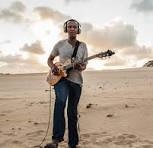
Louis Mhlanga “Africa’s Greatest Guitarist”
By Tapfuma Machakaire 12/11/2025
As youngsters growing up in Rhodesia during the sixties music revolution, we were exposed to the captivating music of legends among them James Marshall “Jimi” Hendrix. His skill and antics with the guitar appeared mystical and many who admired Hendrix never had the illusion of one day emulating him
But one Louis Mhlanga had other ideas as he literally vowed to take after one of the world’s greatest guitarist. Mhlanga told Lauren Lee of CNN in August 2024 that his brothers introduced him to the music of the guitarist who would become his idol, Jimi Hendrix.
“I got inspired by one album of Jimi Hendrix,” That album was “Band of Gypsys,” released in 1970. “My brother brought it home, and I thought, wow, that guitar,” “My brother kept repeating it, and it was like he was injecting me with this music.” said Mhlanga in the CNN interview with the headline How American rocker Jimi Hendrix inspired one of Africa’s greatest guitarists.
“One especially memorable song was “Machine Gun.” The 12-minute jam-style protest of the Vietnam War is often hailed as Hendrix’s greatest work. It showcases a stunning display of guitar virtuosity.”
“His approach to the music and the ideas that he was introducing, the sustain of the guitar which he used and the feedback, I don’t think anybody was doing what he was doing,” Mhlanga explained. “Even today, it still keeps me going.”
Mhlanga may not be the incarnation of Jimi Hendrix, but his achievements speak of a man of determination – now regarded as one of Africa’s greatest guitarists.
Professor Fred Zindi, a renowned musician and Author who has interacted with Mhlanga says “During my days with Louis in London, he was admired by many a musician.
Gary Wallis, the drummer who played with a band called Duran Duran and later with Pink Floyd, came to me one day and asked if Louis could play a session with an English Rock band, “The Kinks” because their lead guitarist had been hospitalized.
The band itself was skeptical as they had never heard of Louis before. They gave him the tape with their recordings. The next day, during the gig, they were amazed to hear the rock sounds that came out of an African man from Zimbabwe and wanted to keep him permanently in the band.”
Among his admirers in his home country is veteran jazz musician Hudson Simbarashe who recently made a passionate appeal for Zimbabwe to formally recognize the contributions of legendary guitarist Louis Mhlanga, before other countries claim him as their own.
In an article published by the Zimpapers Arts and Entertainment Hub on 8 August, 2025 ahead of the Jazz Café event at Kings Kraal in Bulawayo, Simbarashe said, “Mhlanga is a respected icon not just in Zimbabwe but also in South Africa. I strongly feel Zimbabwe should honour him officially, before South Africa takes full credit, much like what happened with the late Dorothy Masuka, affectionately known as Aunty Dot.” “Though I’ve never shared the stage with Louis, his music has been an inspiration since my school days,” said Simbarashe.
Due to his unpredictably rich history in music, journalists have struggled to piece together a coherent story on the man who continues to inspire new generations with his innovative artistry.
Louis Mhlanga was born on 10 November 1956 in Mbare suburb of then Salisbury now Harare. His father, then proprietor of Jabulani Stores in Mbare, was a well- known entrepreneur.
He did his primary education at Chirodzo School in Harare where he completed his grade 7 before he proceeded to Botswana.
Mhlanga recalls his youthful days in the sixties when his mother would play Ella Fitzgerald and Mahalia Jackson records. However, it was his brothers, William and Shaft, who introduced him to the guitar and who became his first inspirations. Louis comes from a musical family where his late brother, William, used to play drums for the Pied Pipers with Brian Rusike and later for Oliver Mtukudzi and The Black Spirits. Shaft, played the keyboards for several bands in Zimbabwe and later in Germany.
“I would just watch and listen to them, and when they are gone, that’s the time I would pick up a guitar and try to copy what they’ve been doing,” Mhlanga told CNN.
Young Louis started playing the guitar at the age of 10, imitating the likes of Jimi Hendrix, The Beatles, The Rolling Stones, Led Zeppelin, Deep Purple and other rock stars from the 60s and 70s. From an early age, he had been surrounded by a wide variety of music: rumba, rock, traditional Zimbabwean rhythms, and the tunes of iconic legends like Thomas Mapfumo.
At just 18, Louis formed the band Baked Beans, alongside notable legendary artists Jethro Shasha and bassist Kookie Tutani. The group played a rare mix of rock and other genres. Seeking new opportunities, Mhlanga joined The Beaters in 1976 on the invitation of band leader Sipho Mabuse, and relocated to South Africa.
In South Africa, he sessioned with musical giants such as Brenda Fassie and Yvonne Chaka Chaka, and had collaborations with artists such as Miriam Makeba, Hugh Masekela, Ray Phiri, Sipho Mabuse, Mlunhgisi Gegane, and Busi Mhlongo. The collaborations expanded his musical horizons and solidified his position in the music industry.
In the late 1970s, Louis relocated to the UK to study electronic engineering. It was there that he met another Zimbabwean legend, Fred Zindi, and contributed to the album Train of Freedom.
He later moved to Nigeria, where he met local celebrities. He also brushed shoulders, and recorded and produced with Nigerian artists, including the legendary King Sunny Ade’s artists.
Returning to Zimbabwe, Louis reunited with his musical comrades—Jethro Shasha, Kelly Rusike, and Jimi Indi, and they founded Music ye Afrika.
His talent extended beyond performing as he also served as an administrator at the Ethnomusicology College now known as the Zimbabwe College of Music. It was then that he wrote and produced the song Chenjerera which was sung by various Zimbabwean artists as a tribute to a member of the iconic Bhundu boys Dave Mankaba.
At the college he taught African guitar courses and recorded albums with bassist Eric van der Westen, one of which also included Malian guitarist and singer Habib Koité.
Mhlanga has also embraced digital platforms, sharing his artistry with an even wider global audience, proving that his music knows no boundaries.
Mhlanga’s acoustic and electric guitar prowess is ever-present, and his distinctive style shines through tracks like living for a Living and the solo piece The Secrets of Pauline. With a carefully curated team of collaborators, like Rob Watson on drums and Tlale Makhene on percussion, the album breathes life into each composition, making Living for the Living a true testament to Mhlanga’s enduring creativity and the lasting impact of his artistry.
One writer says Mhlanga’s story is one of relentless passion, of triumphs big and small, of rhythms that speak not just to the ears but to the soul.
Mhlanga also spent a year in the Netherlands playing with various groups in Amsterdam and Utrecht.
Zimbabweans will remember Mhlanga for his 2001 international debut, “Shamwari”’ which includes the hit single “Distant Lover” which popular producer/presenter Mai Rebecca Chisamba uses on all her talk shows on Zimbabwe television.
Louis married Margaret Indi in the late 1980s, but unfortunately Margaret passed on in the late 1990s.
It is said Mhlanga’s performances are still as mesmerizing as ever, whether he’s on stage at international festivals or in intimate local venues. His awards include:
- Best New Artist at the South African Music Awards (SAMA) (2013)
- International Jazz Artist of the Year at the Global Music Awards (2018)
- Lifetime Achievement Award from the Durban Jazz Society (2023)
- Artist of the Decade by Jazz South Africa (2025)
- International Jazz Album of the Year at the Global Music Awards
- Best Jazz Album at the South African Music Awards (SAMA)
- Southern Africa’s Greatest Guitarist Award
Mhlanga’s achievements are a testament to his innovative fusion of traditional African music with modern jazz, creating a unique sound that has captivated audiences worldwide.