NICHOLAS ZAKARIA, THE GODFATHER OF SUNGURA MUSIC DIES
Humble, Disciplined, Masterful and Consistent
By Kamangeni Phiri
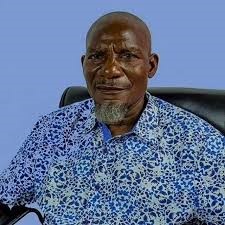
Nicholas ‘Madzibaba’ Zakaria, the man widely credited with shaping the template that propelled the sungura genre to national prominence, has died.
He was 66.
Zakaria, affectionately called Senior Lecturer by fans and fellow musicians, leaves behind a lasting musical legacy that influenced generations of artists. He is survived by his wife, Margaret Gweshe, and their two children.
Few musicians have shaped Zimbabwe’s music landscape with as much commitment, authority, consistency and generosity as Zakaria.
To many, he was the godfather of sungura – a towering figure whose sharp, melodic guitar lines and disciplined arrangements became the template used by generations of artists. To others, he was the Senior Lecturer, a patient and selfless mentor who moulded some of the nation’s most iconic musical talents, including the vastly talented Alick Macheso.
“I love nurturing talent, and I am happy that some of my students’ achievements have even surpassed my own. That, to me, was a source of great pride, and I pray for more such success in the future,” Zakaria once said.
While many musicians retire at age 65 and struggle with the pressures and pitfalls of fame, Zakaria at 69 was still raring to go. He had remained remarkably grounded for decades and once said he had no plans to slow down, even as he occasionally battled diabetes.
This year marked his 50th anniversary in the music industry, yet he had remained energetic, committed, and eager to perform. He had often said that he would stay with music “till death do us part.”
For him, longevity came down to two pillars – discipline and faith. “To succeed, you must stay focused and put your relationship with God first,” he said.
Zakaria was indeed deeply religious, a truth reflected in some of his spiritually anchored hits such as Mabvi namagokora, Mbuva Yehupenyu, Mwari Variko and Munamato. From his early roots in Islam to his years in Roman Catholicism, the Johane Masowe Apostolic Church, and finally the Pentecostal His Grace International Ministries Church, his life had been defined by a continuous and evolving spiritual journey.
“Being a ‘Madzibaba’ was part of my spiritual journey, but I stopped fellowshipping there in 1999. Although I no longer worship with the Johane Masowe Apostolic Church, the nickname ‘Madzibaba’ has remained part of my identity and artistic trademark. My bald head and beard are simply a fashion choice and have nothing to do with my religion,” he once said.
In recent years, Zakaria has attended several emerging Pentecostal churches, including Prophetic Healing and Deliverance (PHD) Ministries, led by the controversial self-proclaimed prophet Walter Magaya.
It was no surprise that Zakaria had managed to steer clear of the controversies and scandals that often plague the music industry throughout his entire career.
Reflecting on his stamina last year, Zakaria noted: “I turned 68, and I still have the energy to play for hours. I can perform for up to four hours non-stop, and afterwards I can play for another hour. I’m grateful to have such stamina and energy at my age.”
He was currently crafting new tunes and working on his 30th album.
Zakaria’s 27th album, Inzwa Unzwe, released in 2019, earned him a nomination for Best Sungura Album at the Zimbabwe Music Awards (ZIMA 2020). While many saw the nomination as simply another recognition, Zakaria understood its deeper significance:
“It has been a rollercoaster career with notable highs and lows,” he said. “I am thankful to God for keeping me alive. I have seen it all.”
The nomination, he felt, was not merely a nod to a single album but a celebration of a lifetime of disciplined artistry.
To all who have followed Zimbabwean music over the past four decades, Zakaria represented endurance, a man who has walked through the storms of an unforgiving industry yet remained grounded, faithful to his craft, and driven by a commitment to leave behind something greater than himself.
In 1984, he formed what would become one of Zimbabwe’s most influential bands, Khiama Boys. The meaning of the name was not quite clear though Zakaria once explained it to mean “the end”.
If its name truly meant “the end,” it was a twist of poetic irony that Khiama Boys instead marked the beginning of an era, launching talents who would go on to dominate the Zimbabwean music scene.
The many musicians who passed through Madzibaba’s hands were mostly young, ambitious talents, including the now-legendary Alick Macheso, the late System Tazvida, and Amon Mvula, among others. Many future stars, such as the talented bassist and sungura singer Simon Mutambi, continue to use the Khiama Boys as a launch pad. Zakaria’s emphasis on discipline, rigorous rehearsals, and storytelling sets his band apart, particularly at a time when sungura was struggling for relevance amid the rise of new genres like Zimdancehall.
His leadership was unique and he remained humble despite mentoring many great artistes, a quality that earned him the enduring moniker, Senior Lecturer.
For much of his career, Zakaria was celebrated more by his fans than by formal institutions. Despite nurturing some of the biggest names in Zimbabwean music, he spent years without receiving the kind of accolades many felt he deserved.
That changed in 2017 when Star FM honoured him with a “Legend Award”, it was his first major award in decades of service. More awards and recognitions followed, including a Living Legends Lifetime Achievement Award at the National Arts Merit Awards (NAMA).
Zakaria never displayed any bitterness about the late recognition. Instead, he embraced it with characteristic humility.
One of Zakaria’s lifelong ambitions was the establishment of the Nicholas Zakaria Arts Centre — a hub designed to nurture up-and-coming artists. He envisioned a place where musicians could go record, rehearse, perform and learn about the business side of music.
Economic hardships have delayed the project repeatedly, but Zakaria refused to abandon the dream. In 2020, LoneStar Construction pledged to design the centre, injecting new hope into the vision. Esteem Communications, which manages his brand, also came on board to mobilise support.
For now, Zakaria used his modest Chitungwiza home as a training centre, mentoring artists in cramped spaces and improvised studios. But his commitment remained unwavering.
“I love nurturing talent,” he says. “I am there to help them. One day, the centre will stand.”
In 2024, after turning 68, Zakaria was overwhelmed by a flood of generosity. He was gifted a top-of-the-range Toyota GD6 by flamboyant businessman, Wicknell Chivayo, received celebratory gigs, designer clothing from Unique Gear Fashions, and numerous tokens of appreciation from fans.
“For a long time, it had appeared like I am being left out,” he said. “But I am grateful. I never imagined such love.”
Despite the rapid rise of talented young musicians who now dominate the charts, Zakaria remained unfazed. When asked if he felt threatened by new artists, he responded with calm wisdom:
“I am above competition. I take pride in the achievements of the younger generation.”
Having witnessed the unpredictable nature of the music business in Zimbabwe, Zakaria diversified into agriculture, creating a safety net for himself and his family.
Zakaria was born at a farm in Mazowe to Maluva Chekani, a musician who migrated from Malawi in 1947. The lad seemed destined for music as by age eight, he could play the guitar. By the time he turned 19, he formed his first band – The Green Mangoes – with the help of a friend, the late Robson Kaitano. They used to perform at local shops and surrounding farms.
A self-taught guitarist, Zakaria honed his skills in secret, sneaking moments with his father’s instrument until his melodies could no longer be contained. This was after he quit school before completing Grade 7.
“I lived on a farm in Mazowe where my father played at local beer halls. He didn’t want me touching the guitar, but I would sneak it while he worked in the fields. Eventually, my mother told him. He was angry at first, but later recognised my passion and let me continue,” he recalled.
At the time, music was not a respectable profession; his father earned only a few cents playing at parties. Shy and uncomfortable performing publicly, Zakaria preferred practicing alone in his room. As his skills grew, his reputation spread, prompting the estate owner to invest in a PA system so he could play for larger audiences.
Zakaria was married to Margaret Gweshe who was a dancer and composer with the Khiama Boys before Madzibaba asked her to focus on raising their children. Together they had three children, though tragedy struck in 2008 when their son Simba committed suicide.
Music runs in the family. Zakaria’s younger brother, Zakaria Zakaria, was also a talented guitarist who joined forces with Alick Macheso to form Orchestra Mberikwazvo in 1997. This came after Madzibaba briefly left music to work as a truck driver, raising funds to buy instruments during Zimbabwe’s economic hardships.
In 1980, Zakaria moved to Harare, joining Vhuka Boys before co-founding the Khiama Boys in 1984. The band, including the late Cephas Karushanga, Levison Chakanyuka, the late Tineyi Chikupo, Alick Macheso, System Tazvida, and his wife Margaret, went on to shape Zimbabwe’s music scene. When the group split in 1997, Alick Macheso formed Orchestra Mberikwazvo, which became one of Zimbabwe’s most popular music acts.
Madzibaba was also involved in advocacy work, particularly in the fight against gender-based violence, a cause he supports passionately but quietly.
As Zimbabwe’s music landscape continues to evolve, Nicholas Zakaria stands as a reminder that true legends are not measured by chart positions, wealth or popularity, but by impact. He remains, unquestionably, sungura’s Senior Lecturer – a man whose legacy will outlive the guitars he played with his left hand, the stages he performed on, and the applause he recieved.
- Best Rated 100 Zimbabwean Songs | https://zimlegends1.com/top-songs
-

-

-